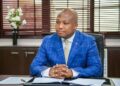
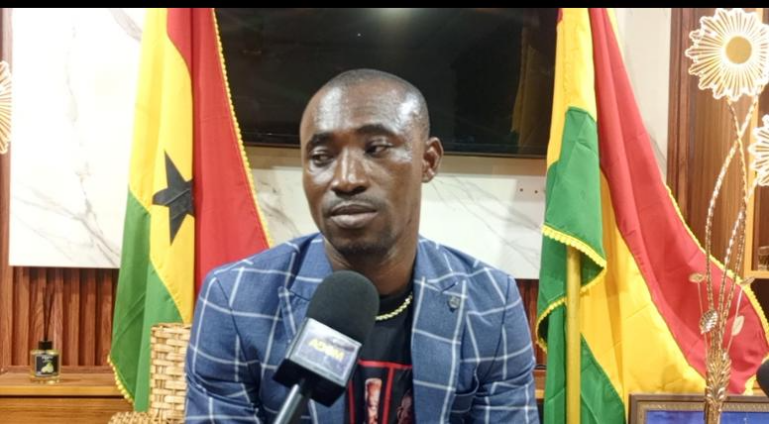
Ghanaian entrepreneur and farmer Rev. Tweneboah Kodua has announced his plan to run as an independent candidate in the 2028 presidential election. He made the declaration during a press conference in Kumasi, explaining that his decision stems from dissatisfaction with what he sees as the country’s poor governance under successive administrations.
He emphasized that he would contest independently due to his lack of confidence in the major political parties.
“I will run as an independent candidate. The political parties have had their chance to lead this country, but Ghanaians are still struggling with issues that should have been solved long ago,” he said.
Rev. Kodua also alleged that although President John Mahama aims to reform and improve the country, he encounters opposition within his own party.
He urged Ghanaians who are dissatisfied with the current two-party system to support an independent political alternative.
He further argued that despite more than six decades of independence, Ghana has not achieved true self-reliance or fully utilized its natural resources for national development.
“Ghana has not yet achieved true independence. That is why we cannot use the resources that God has blessed us with to develop the nation,” he said.
“We cannot claim to be independent while continuing to rely on foreign nations. I therefore intend to give Ghanaians the self-reliance they deserve.”
Rev. Kodua further argued that certain provisions of the 1992 Constitution have become outdated and, in his view, benefit only a particular segment of society rather than the nation as a whole.
He indicated that if elected, constitutional reform would be a key priority of his government.
He also outlined his main policy focus areas, which include modernising agriculture, creating jobs for young people, and cutting down Ghana’s reliance on imported products.
Speaking as a farmer, he added that he has planted maize on 120 acres of land and plans to donate the produce to support the government’s school feeding programme.
“My background as a farmer and entrepreneur gives me a practical understanding of where the problems are and how to fix them,” he said.
Rev. Kodua explained that his experience in farming and business equips him with firsthand insight into the country’s challenges and possible solutions.
He also promised to eliminate electricity bills for households in Ghana, arguing that the country has enough resources to cover the costs.
Additionally, he proposed setting up mining centres in all regions to generate employment for young people and encourage more regulated mining activities.
“If I become president, Ghanaian households will not pay electricity bills because we have resources that can cover the costs,” he stated.
He further criticised Ghana’s education system, describing it as too theoretical and poorly aligned with the country’s economic realities.
He said that if elected, his government would introduce a “Ghana School” model focused on technical and vocational training to give graduates practical skills and reduce reliance on public sector jobs.
The upcoming 2028 election is expected to be Ghana’s next presidential race after the 2024 polls. While independent candidates have historically found it difficult to compete with the two dominant parties—the National Democratic Congress (NDC) and the New Patriotic Party (NPP)—there has been growing public frustration with both in recent years.
Rev. Kodua added that he intends to start nationwide consultations in the coming months to mobilise support ahead of the formal campaign period.